
How AI Is Transforming Tax Compliance for Nigerian Businesses
From document extraction to instant tax advice, AI is eliminating the grunt work from tax season. Here's how it works and why it matters.
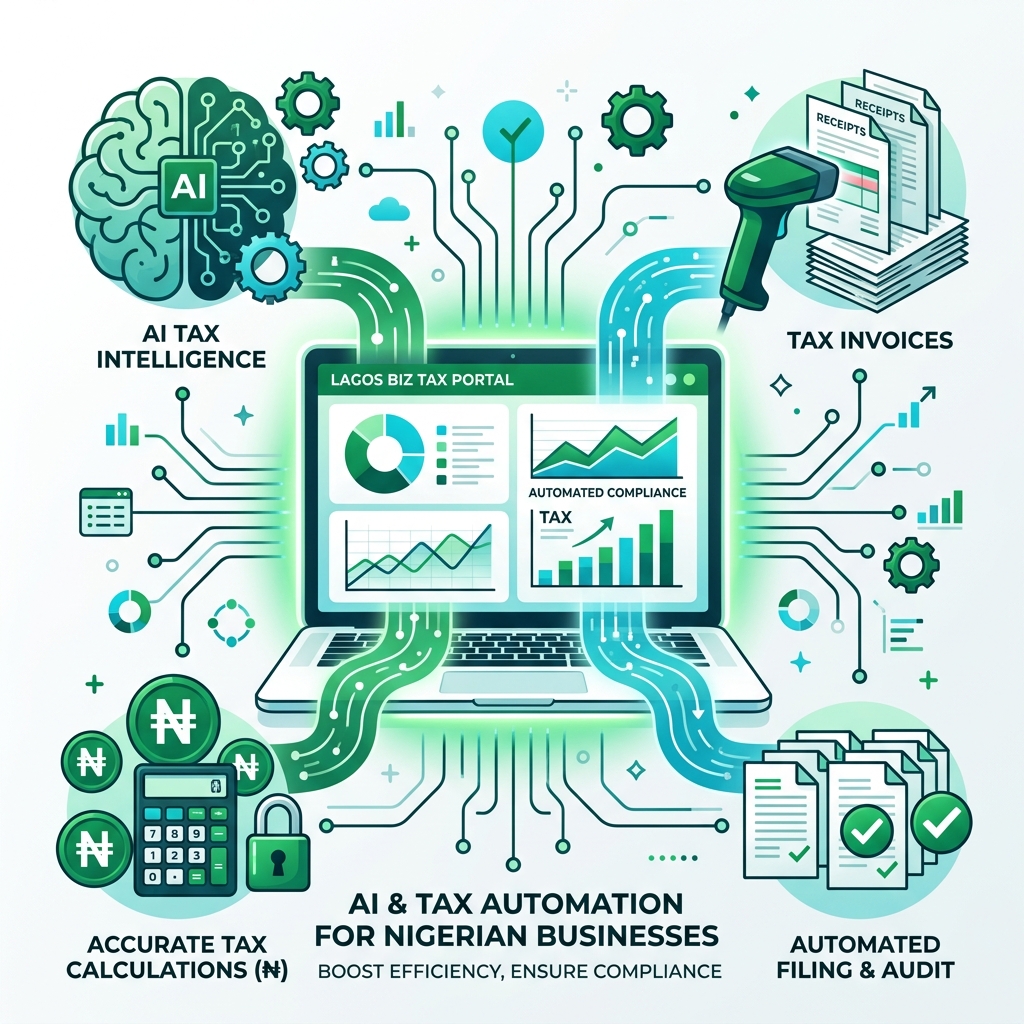
Every tax season, the same ritual plays out in accounting firms across Nigeria: mountains of receipts, endless spreadsheets, manual data entry that stretches late into the night, and the constant fear that one mistyped number will trigger a penalty. Sound familiar?
It doesn't have to be this way. Artificial Intelligence is fundamentally changing how tax compliance works, and Nigerian firms that embrace it are already seeing dramatic results.
The Problem AI Solves
Let's be honest about what makes tax filing painful in Nigeria:
- Manual data entry: Accountants spend hours typing numbers from receipts and ledgers into spreadsheets, work that's tedious, error-prone, and frankly, beneath their expertise.
- Complex regulations: PAYE, VAT, CIT, WHT; each has its own rules, rates, and edge cases. Keeping up with changes is a full-time job.
- Volume: Firms managing 50+ clients simply cannot give each filing the attention it deserves using manual processes.
AI doesn't just speed up these tasks, it eliminates entire categories of work.
How AI-Powered Tax Compliance Works
1. Intelligent Document Extraction
Instead of manually typing data from a client's financial statement, you simply upload the document. AI reads the PDF, image, or spreadsheet, identifies the relevant fields (revenue, expenses, tax-deductible items), and maps them directly into the correct filing format.
What used to take 45 minutes per document now takes seconds, with higher accuracy than manual entry.
2. Automated Liability Calculation
Once the data is extracted, AI applies the correct tax rules automatically. It knows the current VAT rate. It knows the CIT brackets. It knows the PAYE thresholds. And it applies them consistently across every single filing, with no human error or outdated rate tables.
3. Instant Expert Guidance
Ever wished you had a tax expert on call at 2 AM during filing season? AI-powered tax advisors, trained specifically on Nigerian tax law, can answer complex questions instantly. "Is this expense deductible under the current CIT rules?", answered in seconds, not hours.
What This Means for Nigerian Firms
The firms adopting AI today are seeing:
- 70-80% reduction in time spent on data entry and document processing.
- Near-zero error rates in computation sheets and return documents.
- Ability to scale from 20 clients to 200+ without proportionally increasing headcount.
- Happier staff who spend time on advisory work rather than data entry drudgery.
This isn't science fiction. This is what's happening right now in the Nigerian market.
The Competitive Edge
Here's the uncomfortable truth: AI adoption in Nigerian tax compliance isn't a question of "if," but "when." The firms that move first will capture market share, build reputations for accuracy and speed, and attract the best talent.
The firms that wait will find themselves competing on price alone, a race to the bottom that nobody wins.
AI doesn't replace accountants. It replaces the grunt work, and frees accountants to do what they're actually trained for: advising clients.
Getting Started
You don't need a computer science degree to start using AI in your practice. Modern platforms like EzeeTax make it as simple as uploading a document and reviewing the output. The AI handles the extraction, calculation, and formatting. You handle the expertise and client relationships.
The future of Nigerian tax compliance is intelligent, automated, and already here. The only question is: will your firm lead or follow?
EzeeTax Editorial
Tax Compliance Insights